
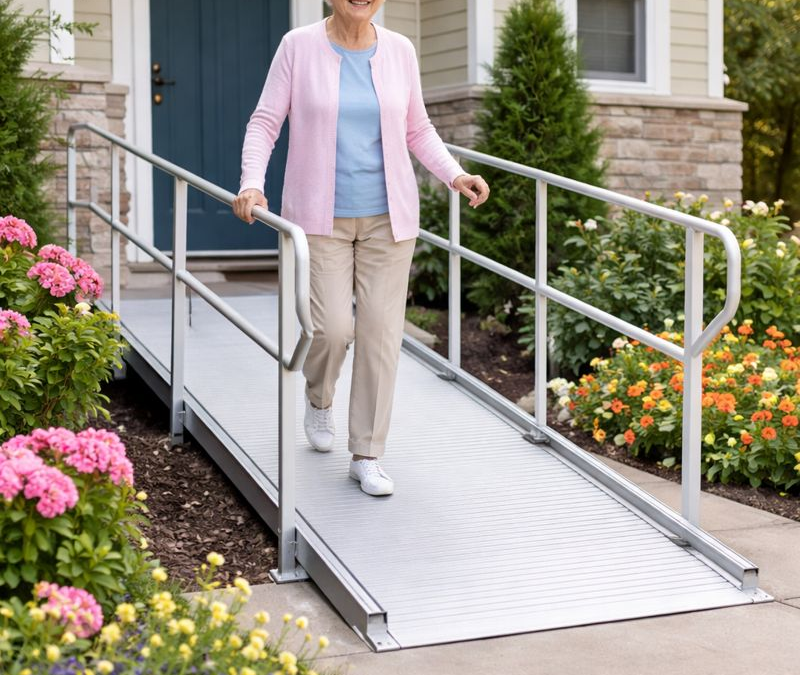
As people age, mobility can change. This is especially true for individuals living with dementia or physical limitations. Creating a safe and accessible home becomes essential for aging in place.
Even small barriers can increase fall risk. Fortunately, ramps provide a simple and effective way to improve safety and independence. When used correctly, they help older adults move confidently throughout their homes.
Understanding the different types of ramps can help families make thoughtful, proactive decisions.
Doorway and Threshold Ramps
First, consider doorways and thresholds. Even a small lip at an entryway can become a serious tripping hazard.
Threshold ramps help smooth these transitions. They create an even surface between rooms or at exterior doors. As a result, walkers, wheelchairs, and scooters can move safely without lifting or stepping over obstacles.
In addition, these ramps work well for sliding doors and patio entries. These areas often include raised tracks that are easy to overlook but difficult to navigate.
Portable Ramps for Changing Needs
In many homes, mobility needs change over time. Because of this, flexibility matters.
Portable ramps offer a lightweight and adjustable solution. They can be moved from one location to another and stored when not in use. For example, families often use them for short steps, curbs, or temporary recovery needs.
As a result, portable ramps allow homes to adapt without permanent construction.
Indoor Ramps for Everyday Movement
Inside the home, small level changes often exist. Sunken living rooms, laundry areas, and hallway transitions are common examples.
Indoor ramps help remove these barriers. They create smooth pathways between spaces and reduce the risk of trips or falls. When combined with proper lighting and non-slip surfaces, they significantly improve safety.
Most importantly, indoor ramps support independence by allowing individuals to move freely without assistance.
Bathroom and Shower Entry Ramps
Bathrooms require special attention. They remain one of the most common areas for household falls.
Shower and bathroom entry ramps help reduce this risk. They eliminate the need to step over raised thresholds, which can be difficult for those with balance or mobility challenges.
In addition, these ramps support privacy and dignity. They allow individuals to enter and exit bathing areas more safely and confidently.
Garage and Outdoor Access Ramps
Garages and outdoor pathways often include uneven surfaces or steps. Over time, these areas can become major obstacles.
Installing ramps in these locations creates consistent access between the home, garage, and yard. As a result, daily activities like running errands or enjoying outdoor time become easier and safer.
These ramps also reduce physical strain on care partners.
Modular and Permanent Ramp Solutions
Sometimes, long-term accessibility solutions are needed. In these cases, modular or permanent ramps may be the best choice.
These systems are designed to remain in place and support daily use. They can be customized to fit a home’s layout and accommodate larger elevation changes.
Although they require planning, permanent ramps provide reliable access for years to come.
Choosing the Right Ramp for Your Home
Every home is different. Therefore, the right ramp solution depends on layout, lifestyle, and future needs.
When planning, consider the following:
- Where do mobility barriers currently exist?
- How might needs change over time?
- Is a portable or permanent solution more appropriate?
By addressing these questions early, families can reduce risk and avoid rushed decisions later.
Ultimately, ramps are more than accessibility tools. They support safety, independence, and peace of mind. Most importantly, they help older adults continue living confidently in the homes they love.